At a glance: the three powertrains side by side
| 2.5 L gas | Hybrid | Plug-in hybrid | |
|---|---|---|---|
| Combined power | 187 hp | 231 hp | 268 hp |
| Combined fuel consumption | 8.8 L/100 km | 6.7 L/100 km | 6.7 L/100 km in gas mode |
| Combined gasoline-electricity rating | — | — | 3.1 Le/100 km |
| All-electric range | — | — | 51 km |
| Drivetrain | HTRAC standard | HTRAC standard | HTRAC standard |
| Towing (with brakes) | 3,500 lb | 2,000 lb | 2,000 lb |
| Cargo space, 2nd row up | 1,095 L | 1,097 L | 902 L |
| Who it’s for | Varied driving, occasional towing | Lots of kilometres, no charger | Short daily trips, charging at home |
See the new Tucson in our network
Where these numbers come from
The fuel consumption ratings and the electric range come from Natural Resources CanadaFR, not from the manufacturer’s brochures: it is the same test procedure for every vehicle sold in the country, which makes the comparison an honest one.
The power figures, towing capacities and cargo volumes come from the Canadian spec sheet for the 2026 Tucson published by Hyundai Canada. Two figures often repeated elsewhere are deliberately left out here: the 776 km of range advertised for the hybrid and the 674 km for the plug-in hybrid. They are not official ratings but calculations based on fuel tank size, and Hyundai says so itself in a footnote.
The 2.5 L gas engine: the only one that tows 3,500 lb
This is the 2.5-litre four-cylinder engine, 187 horsepower and 178 lb-ft, with an eight-speed automatic transmission. It uses 9.7 L/100 km in the city, 7.7 L/100 km on the highway and 8.8 L/100 km combined.
What sets it apart is not fuel consumption, it is hitching: 3,500 lb of towing capacity with brakes, against 2,000 lb for the two electrified versions. If you have a boat or a pop-up camper, the question is settled before you even talk about fuel.
It also offers the largest cargo area with the second row folded down: 2,119 litres, compared with 2,108 for the hybrid and 1,876 for the plug-in hybrid, whose battery takes up part of the floor.
In Canada, the gas engine is found on the Preferred and Preferred with Trend Package trims. See the current price of each trim at Hyundai de MagogFR, the network’s Hyundai dealership.
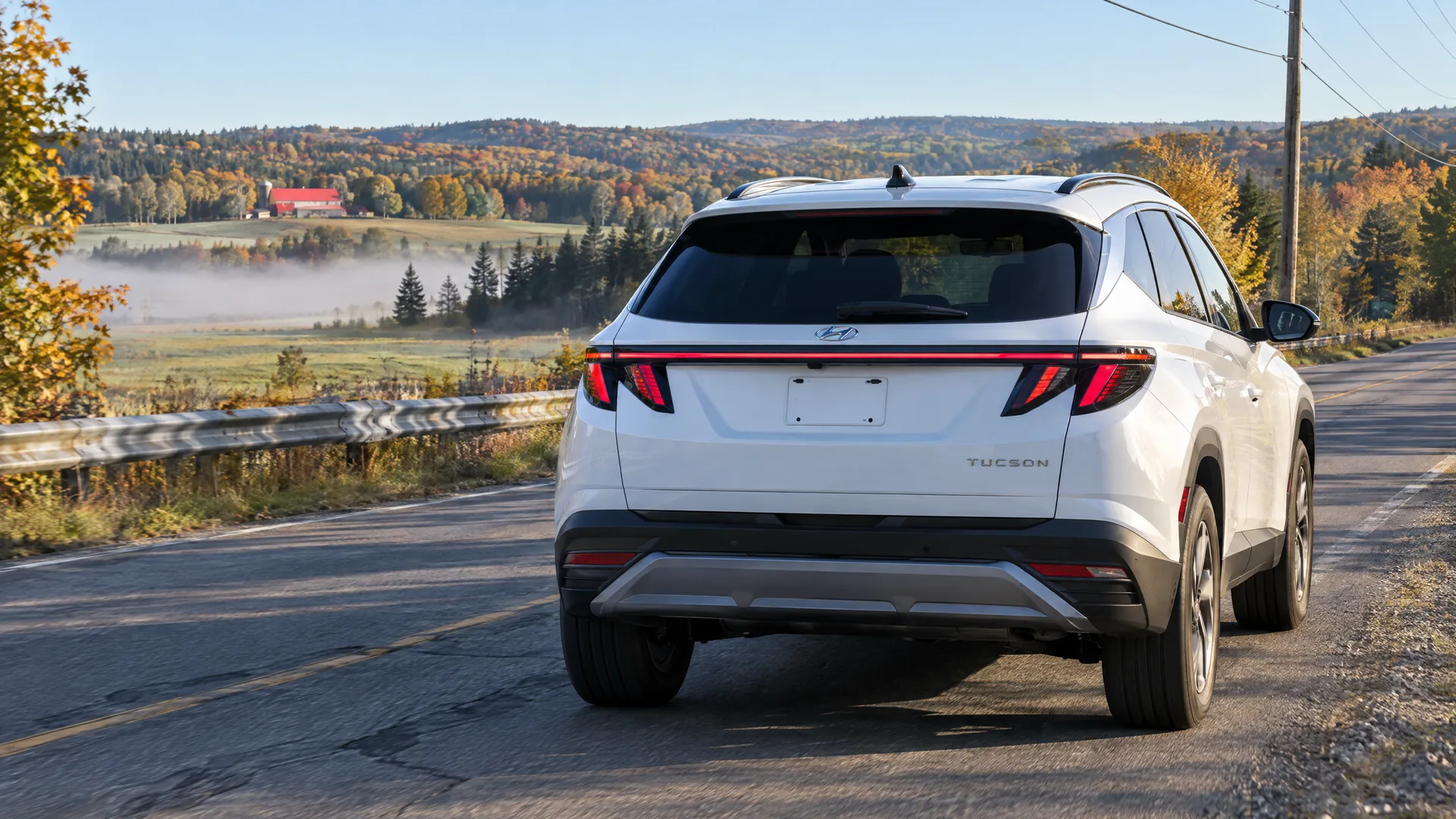
The hybrid: the same vehicle that uses a quarter less fuel
The hybrid replaces the 2.5-litre engine with a 1.6-litre turbo backed by an electric motor: 231 combined horsepower, 271 lb-ft. It does not plug in: its 1.49 kWh battery recharges while driving and braking.
Its combined rating is 6.7 L/100 km, and the breakdown says more than the total: 6.7 in the city and 6.7 on the highway. The hybrid does not use more fuel in the city than in the country, while the gas engine goes from 7.7 to 9.7 L/100 km as soon as you enter an urban area. That is exactly where the electric motor does its work: stops, restarts, slow traffic.
In other words, the more your drive looks like city driving, the wider the gap becomes. On the highway between Magog and Sherbrooke, the gap is one litre per 100 km. For errands, school runs and downtown, it is three.
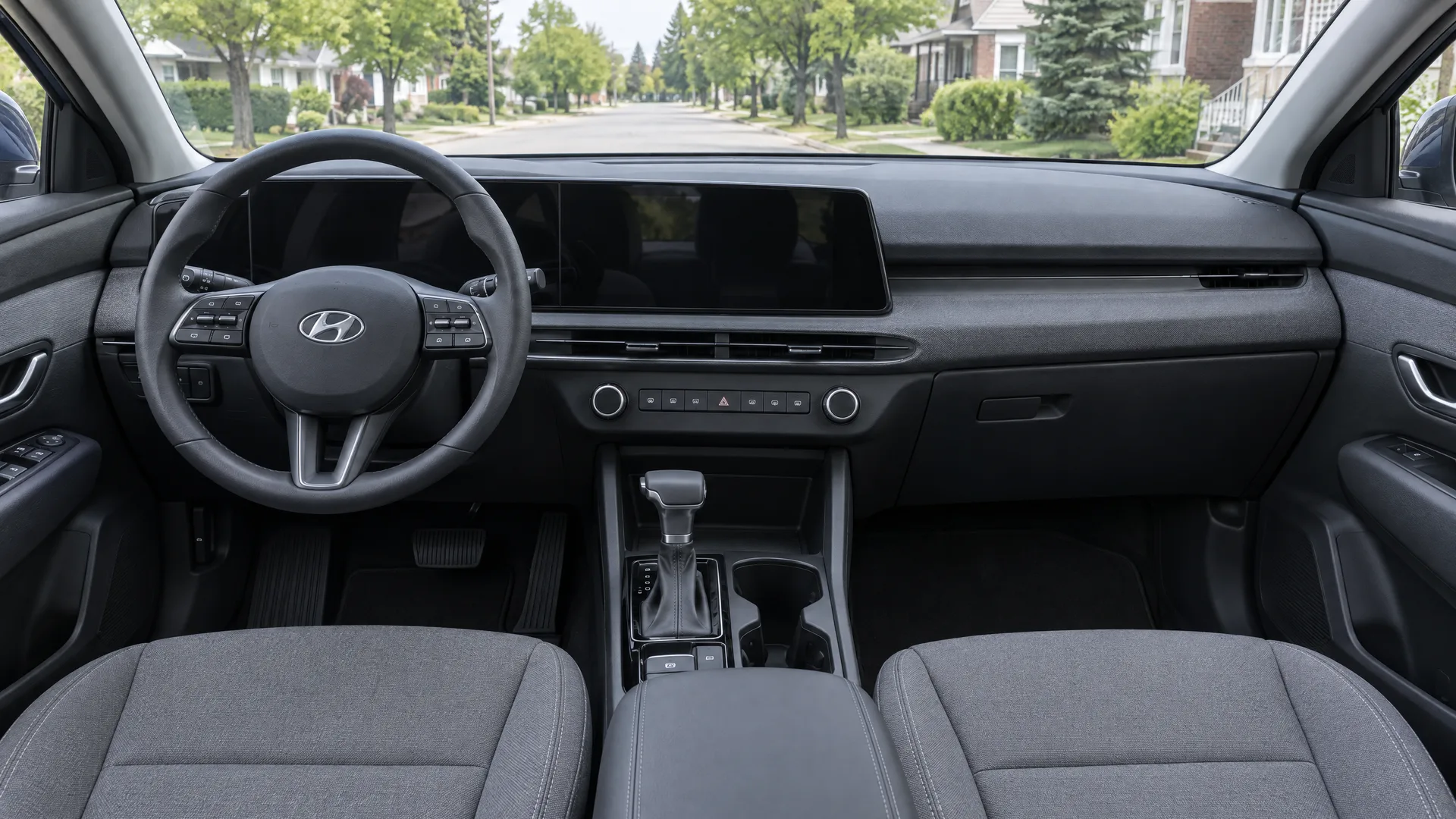
On the warranty side, the hybrid system and its high-voltage battery are covered for 8 years or 160,000 km, beyond the 5-year or 100,000 km powertrain warranty. The network’s hybrid models are compared in the hybrid section of the portal.
The plug-in hybrid: 51 km before you open the fuel door
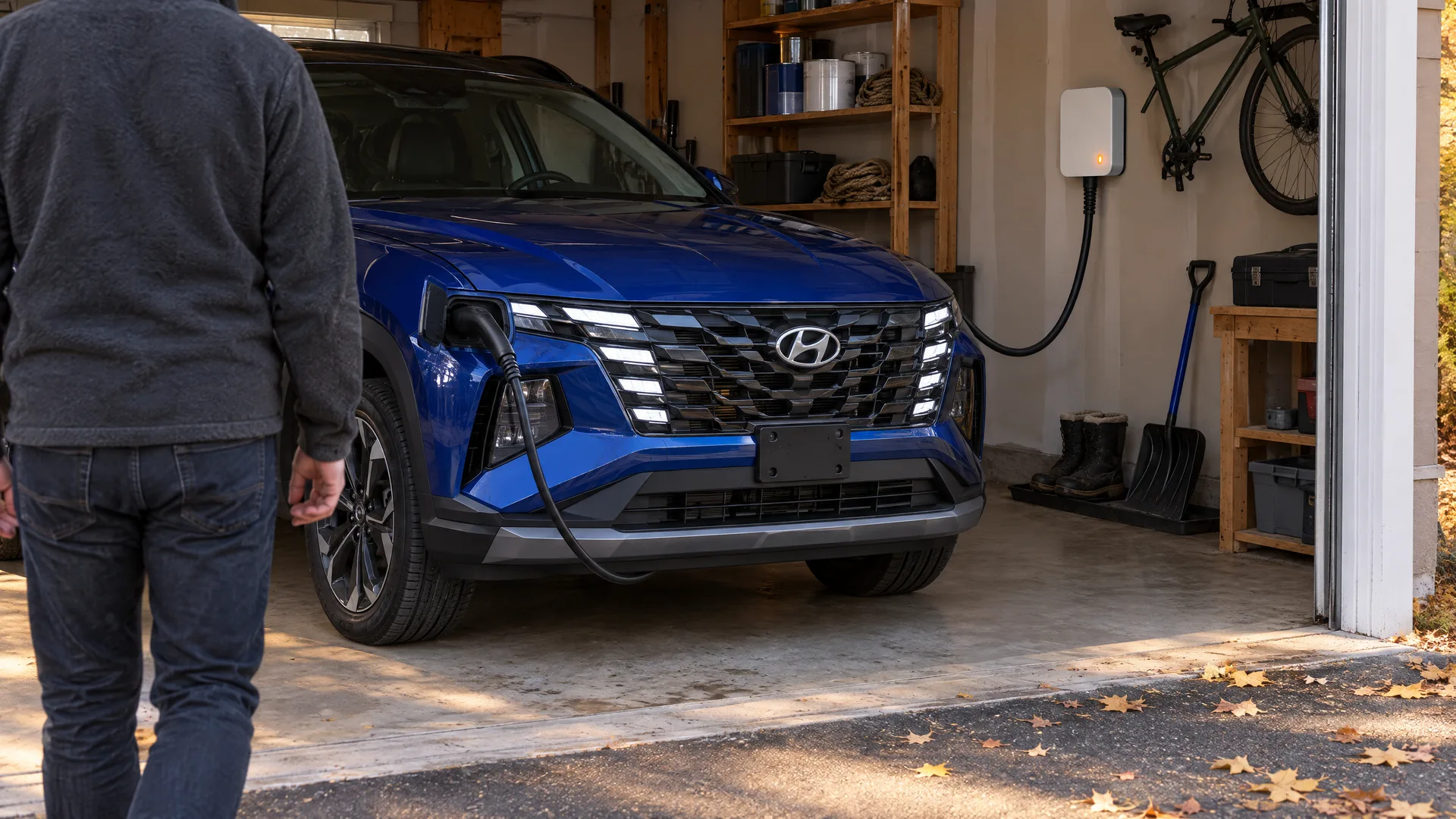
The plug-in hybrid keeps the 1.6-litre turbo and adds a more powerful electric motor and a 13.8 kWh battery: 268 combined horsepower and, above all, 51 km of official range in all-electric mode. Its combined gasoline-electricity rating is 3.1 Le/100 km. With an empty battery, it becomes an ordinary hybrid again at 6.7 L/100 km, which is its big difference from a fully electric vehicle: you cannot run out of range.
Charging takes two hours on a 240-volt charger, thanks to a 7.2 kW onboard charger. Hyundai does not publish any charging time on a standard 120-volt outlet: if that is your only option, ask at the dealership before you buy.
The plug-in math comes down to a single number: your daily distance. Under 51 km a day, with a charger at home, most of your trips are made without gas and the engine is only used for longer outings. Above that, or without a charger, you are hauling a big battery for nothing: the plug-in weighs about 150 kg more than the regular hybrid, which then becomes the more logical choice.
Two trade-offs to know about: cargo space drops to 902 litres behind the second row, nearly 200 litres less than the other two, and the plug-in hybrid is only available on the Ultimate trim. All the new plug-in hybrids in our network are compared in the same place.
HTRAC: all-wheel drive is standard on all three
It is the most frequently asked question, and the answer is clear: HTRAC all-wheel drive is standard on every Canadian trim of the 2026 Tucson, gas included. There is no front-wheel-drive Tucson in Canada: Natural Resources Canada publishes only one line for the gas Tucson, and it is marked all-wheel drive.
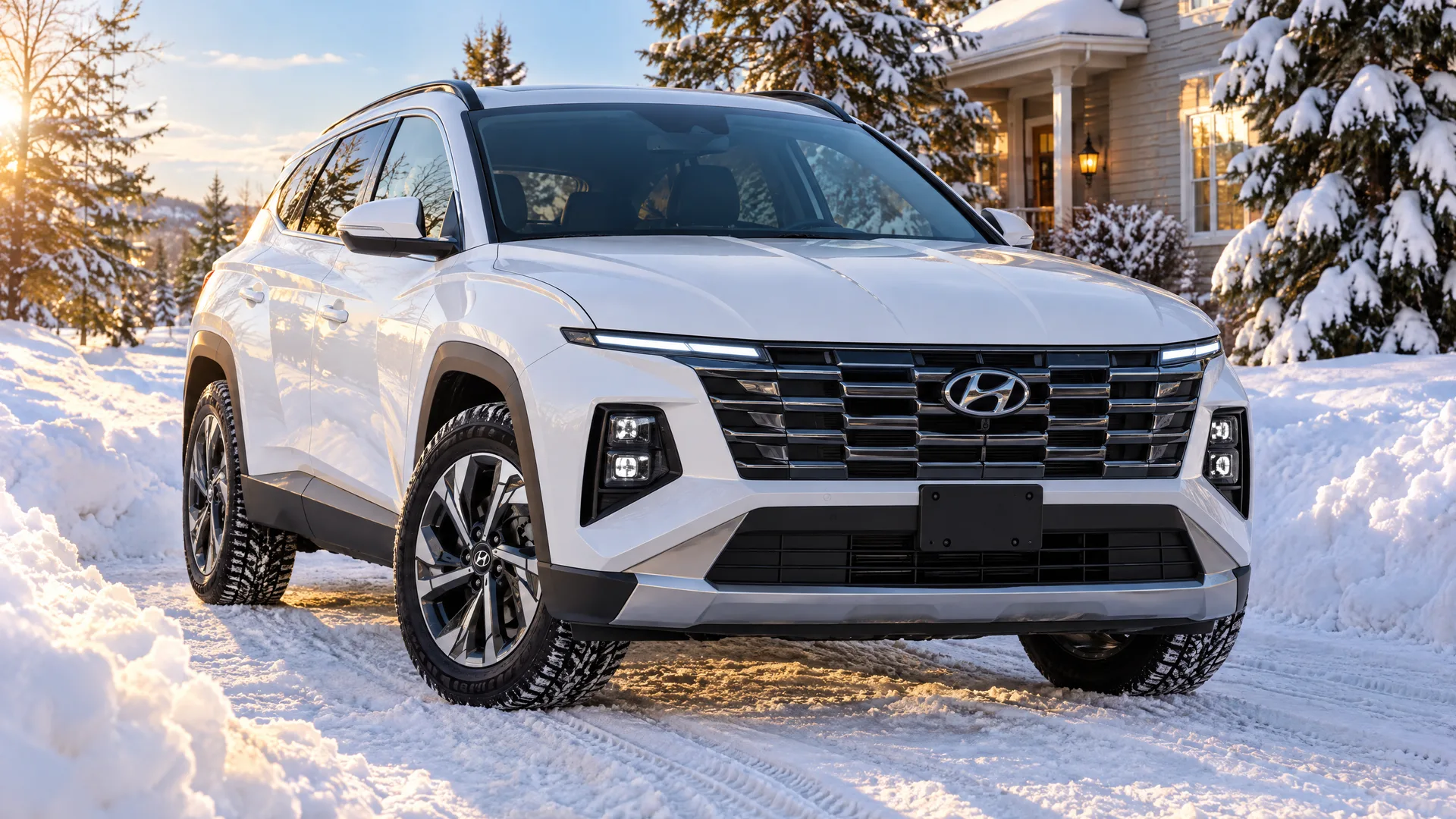
HTRAC distributes torque between the front and rear according to grip and the selected driving mode. For a Quebec winter, that means the question to ask at the dealership is no longer “can I get all-wheel drive” but “which winter tires will you put on it”. That is where the real difference is made.
What the difference really means, in litres
Rather than guess at a fuel price that changes every week, here is the raw difference in litres, calculated from the official combined ratings. Multiply by what you pay at the pump.
| Annual distance | Gas, 8.8 L/100 km | Hybrid, 6.7 L/100 km | Difference |
|---|---|---|---|
| 12,000 km | 1,056 L | 804 L | 252 L less |
| 20,000 km | 1,760 L | 1,340 L | 420 L less |
| 30,000 km | 2,640 L | 2,010 L | 630 L less |
The plug-in hybrid is not in this table: its real consumption depends entirely on the share of your kilometres driven on the battery, and no one but you knows that number. One last benchmark from the same ratings: CO2 emissions go from 207 g/km for gas to 157 g/km for the hybrid, and 64 g/km for the plug-in hybrid.
And if the Tucson is too small: the Santa Fe hybrid
The Tucson is a compact five-seat SUV. For a third row, the 2026 Santa Fe hybrid uses the same 231-horsepower powertrain and the same standard HTRAC drive, with a combined rating of 6.9 L/100 km, only two tenths more, for a noticeably bigger vehicle. It can be configured with seven seats, or with six seats and captain’s chairs on the Ultimate hybrid Calligraphy.
See the current price of the 2026 Santa FeFR, or compare the two in all the new Hyundai vehicles in our network.
See the new Tucson Get my trade-in appraisal See current offers
Frequently asked questions
Do you need to plug in the Tucson hybrid?
No. The regular hybrid does not plug in: its 1.49 kWh battery recharges while driving and braking. Only the Tucson plug-in hybrid, with its 13.8 kWh battery, plugs in, and even that one does not have to be: it then works like a regular hybrid.
Is the 2026 Tucson offered with front-wheel drive in Canada?
No. HTRAC all-wheel drive is standard on every Canadian trim of the 2026 Tucson, whatever the powertrain. Natural Resources Canada publishes only one fuel consumption line for the gas Tucson, and it is marked all-wheel drive.
Is 51 km of electric range enough?
It depends on your daily distance. Under 51 km a day with charging at home, most of your trips are made without gas. Above that, or without a charger, the regular hybrid becomes the more logical choice: the same 6.7 L/100 km, without the battery to carry around.
Which powertrain can tow a trailer?
The 2.5 L gas engine, with an advertised capacity of 3,500 lb with brakes. The hybrid and plug-in hybrid versions are limited to 2,000 lb. Always check the actual weight of your loaded trailer, not its empty weight.
Are these fuel consumption ratings still current?
They come from Natural Resources Canada data for the 2026 model year, in the dataset updated September 18, 2026 and checked on September 23, 2026. Ratings change with each model year: if you are reading this later, the model’s page at the dealership has the current information, price included.