In brief: which ones plug in, which ones don’t
| Powertrain | Does it plug in? | Can it run on electricity alone? | Example from the network |
|---|---|---|---|
| Mild hybrid (MHEV) | No | Never | Mazda CX-70 and CX-90 mild hybrids |
| Hybrid (HEV) | No | For short stretches | Hyundai Tucson Hybrid, Kia Niro |
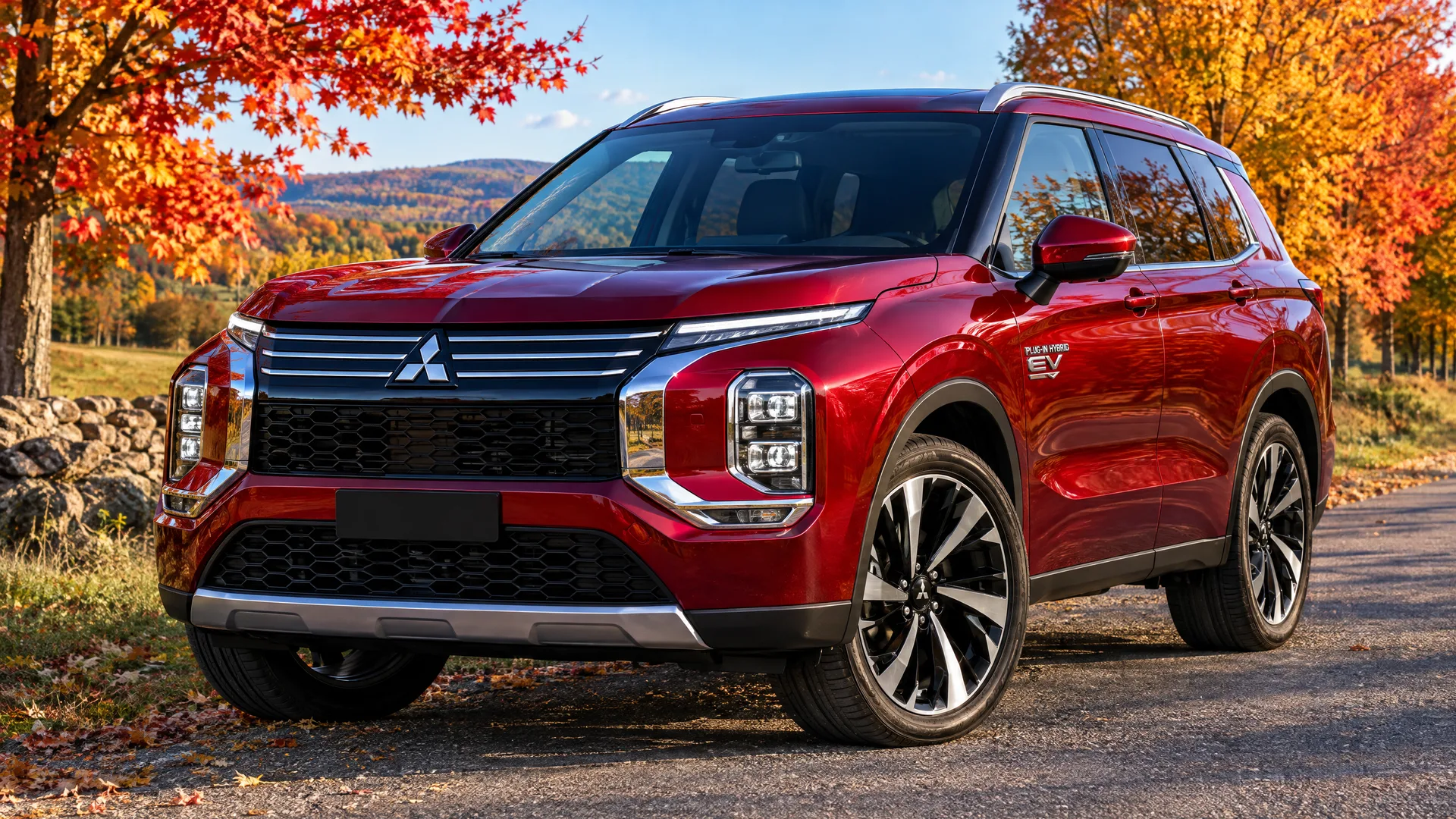
| Plug-in hybrid (PHEV) | Yes | Yes, 43 to 72 km depending on the model | Mitsubishi Outlander PHEV, Kia Niro PHEV |
| Electric (BEV) | Yes, necessarily | Always, since there is no other motor | Kia Niro EV, Hyundai Kona Electric |
Remember that column. Two of these powertrains plug in, two do not, and that line decides whether your parking spot has to change before your vehicle does.
Browse the new vehicles in the network
The mild hybrid (MHEV): a boost, not an electric powertrain
It is the most discreet of the four, and the one most readily mistaken for a hybrid. A 48-volt electrical system assists the gas engine (gentler starts, smoother stop-start, a little help when accelerating), but it never propels the vehicle on its own. The small battery recharges while decelerating and braking. There is no plug.
The clearest proof comes from the official classification: Natural Resources Canada lists these vehicles in its table of ordinary gasoline vehicles, not in the one for plug-ins or electrics. They have no electric range rating, because they have no electric range.
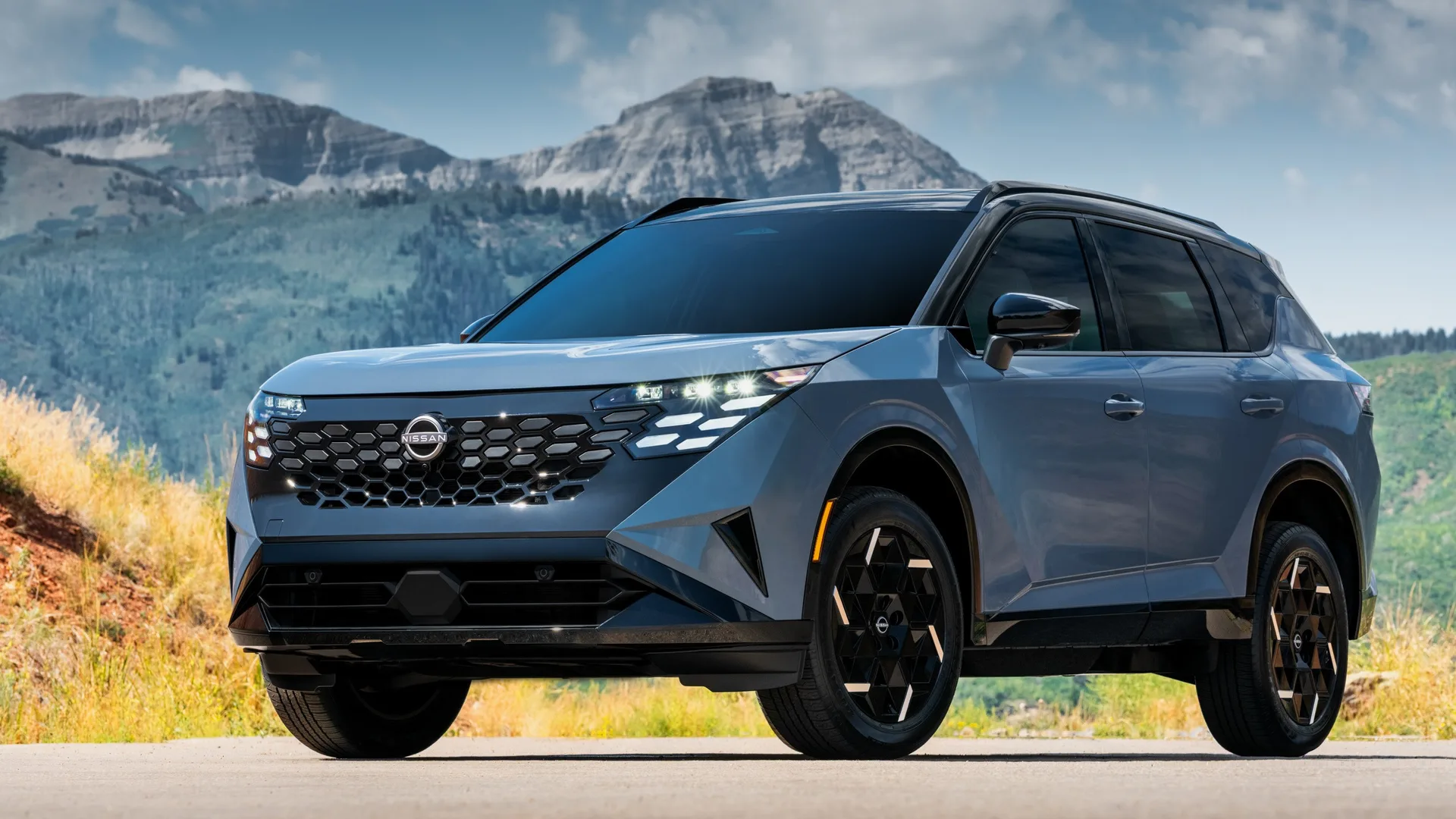
In the network, these are the big six-cylinder Mazdas: the CX-70 mild hybridFR and the CX-90 mild hybridFR, both powered by the 3.3 L turbocharged e-Skyactiv G engine with all-wheel drive. Official ratings: 9.3 L/100 km combined for the CX-70, 9.4 for the CX-90.
Who it’s for: someone who wants a big six-cylinder SUV, smooth and well finished, without changing anything about their habits. The mild hybrid does not drive differently from a gas model, which is precisely its appeal and its limit.
The hybrid (HEV): electricity without ever plugging in
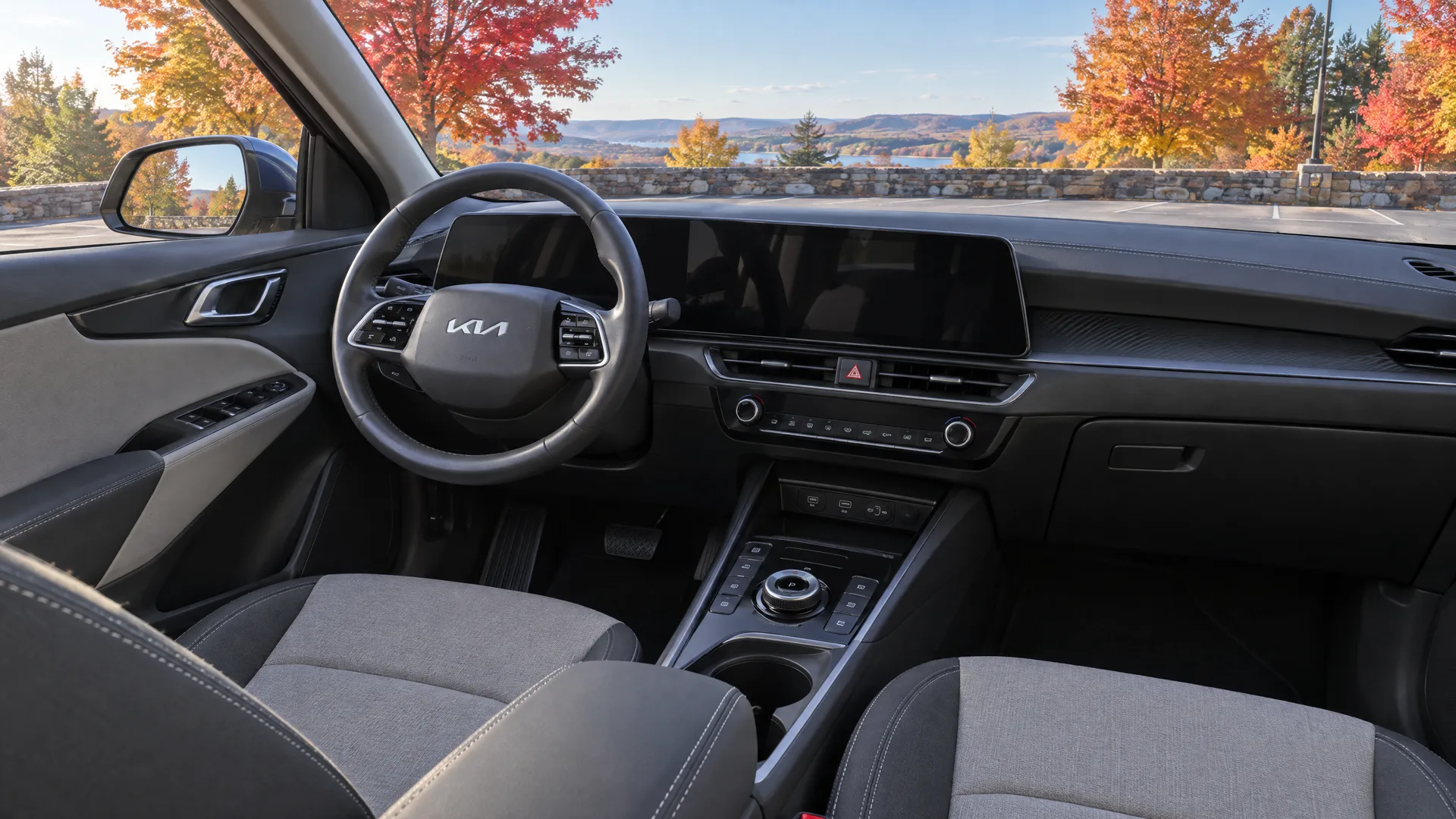
Here, the electric motor can genuinely propel the vehicle, at times: when starting off, in town, at low speed, coasting. The battery regenerates while driving and braking. There is still no plug, which is what makes this powertrain so easy to live with.
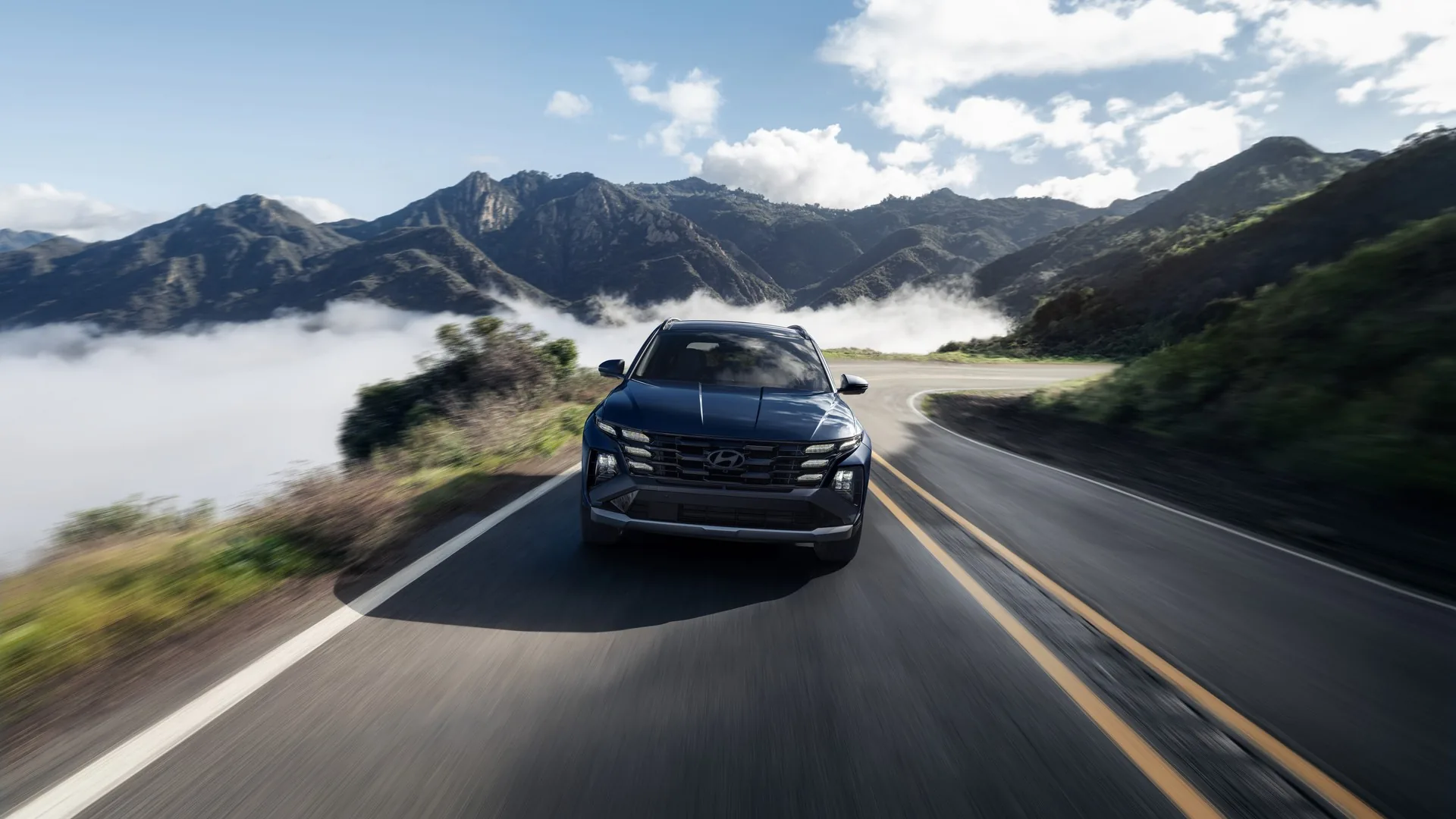
This is also where the fuel consumption gap becomes plain. At Hyundai de Magog, the 2026 TucsonFR is rated 8.8 L/100 km as a gas model with all-wheel drive, against 6.7 L/100 km as a hybrid. The 2026 Kia NiroFR drops to 4.8 L/100 km, and 4.4 in its FE trim.
The network has several others: Kia Sportage Hybrid (6.7 L/100 km with all-wheel drive), Kia Sorento Hybrid (7.0), Hyundai Santa Fe Hybrid (6.9), Hyundai Palisade Hybrid (8.1 for a large three-row SUV with all-wheel drive), Kia Carnival Hybrid, and the Hyundai Elantra and Sonata hybrids.
Who it’s for: someone who drives a lot in town or in traffic and has no home charger. Along with the mild hybrid, it is one of the two powertrains that require no installation, no change of habits and no planning, and it is the more fuel-efficient of the two.
The plug-in hybrid (PHEV): electric on weekdays, gas on vacation
The PHEV carries a much bigger battery, which plugs in. It does your daily trips on electricity, then, once the battery is depleted, behaves like an ordinary hybrid and keeps going on gas for as long as there is fuel.
It is the powertrain most dependent on your discipline: a plug-in hybrid that is never plugged in is just a hybrid carrying a useless battery.
| Model | Electric range | Fuel consumption once the battery is empty | Dealership |
|---|---|---|---|
| 2026 Mitsubishi Outlander PHEV | 72 km | 8.6 L/100 km | Mitsubishi Granby, Drummondville |
| 2026 Nissan Rogue plug-in hybrid | 61 km | 9.1 L/100 km | 5 Nissan dealerships |
| 2026 Kia Niro PHEV | 55 km | 4.8 L/100 km | 5 Kia dealerships |
| 2026 Kia Sorento PHEV | 55 km | 6.9 L/100 km | 5 Kia dealerships |
| 2026 Kia Sportage PHEV | 53 km | 6.6 L/100 km | 5 Kia dealerships |
| 2026 Hyundai Tucson plug-in hybrid | 51 km | 6.7 L/100 km | Hyundai Magog |
| Mazda CX-70 PHEV | 43 to 51 km depending on the trim | 9.0 to 9.2 L/100 km | 4 Mazda dealerships |
| Mazda CX-90 PHEV | 43 km | 9.2 L/100 km | 4 Mazda dealerships |
The Outlander PHEVFR leads the group with 72 km, and it is at the same time a seven-seater with all-wheel drive. The Rogue plug-in hybridFR follows at 61 km.
Mind the second column, often ignored: once the battery is empty, the gaps are huge. The Kia Niro PHEV uses 4.8 L/100 km, the Mazda CX-90 PHEV 9.2. If you plug in every evening, that column almost never concerns you. If you plug in once a week, it is the one that decides your fuel bill.
Who it’s for: a home charger, a daily commute under the model’s electric range, and the occasional long drive without wanting to plan charging stops.
The electric (BEV): a single source of energy
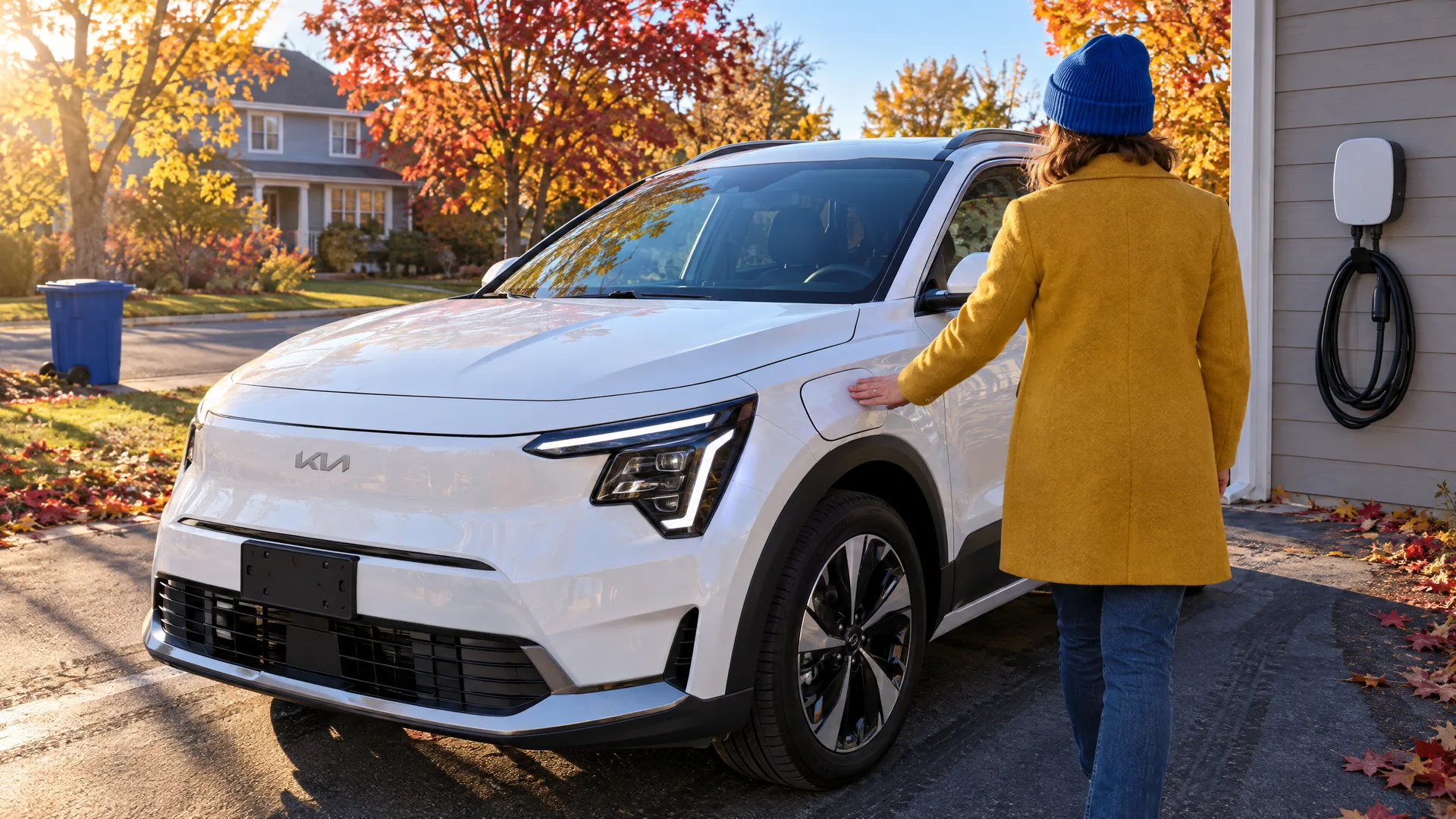
No gas engine, no oil, no exhaust. All the energy comes from the battery, and the battery comes from the plug. The network offers several, in every size: Kia Niro EVFR (407 km, 18.6 kWh/100 km), 2026 Hyundai Kona ElectricFR (420 km, 18.1 kWh/100 km), Nissan LEAFFR (up to 488 km), Hyundai IONIQ 5 and IONIQ 9, Kia EV5 and EV9, Nissan Ariya.
Who it’s for: charging at home, a daily commute well under the range, and accepting that a long trip has to be planned. In exchange, it is the powertrain with by far the lowest running cost in Quebec: the detailed math is here.
Choosing based on your commute and your charger
Two questions are enough to eliminate three options out of four. Ask them in this order.
1. Can you plug in where the vehicle sleeps? If the answer is no (street parking, a building without chargers, a tenant without permission), the mild hybrid and the hybrid are your only two reasonable options. That is not a consolation prize: a Kia Niro at 4.8 L/100 km uses less than many compact cars.
2. How many kilometres do you drive on an ordinary day? Measure it over a real week rather than estimating it. Then compare it with the “electric range” column in the table above.
- Under 40 km a day: every plug-in hybrid in the network covers your daily driving on electricity, even the least capable ones. An electric vehicle also suits you well.
- Between 40 and 70 km: the choice narrows to the PHEVs with the longest range, or to an electric vehicle.
- Over 70 km, every day: no PHEV in the network will get through the full day on electricity. The electric vehicle becomes the consistent choice, if charging keeps up.
- Highly variable trips, frequent long drives: the ordinary hybrid becomes the simplest choice again.
One reminder that holds for all four: Natural Resources Canada’s ratings are measured under standardized conditions. In severe cold, electric range drops and fuel consumption rises. Keep a margin on the numbers in the table, especially from December to March.
The same model, three powertrains
The best way to feel the difference is to see it on a single vehicle. Two models in the network make that possible.
The 2026 Hyundai Tucson comes as a gas model (8.8 L/100 km with all-wheel drive), as a hybrid (6.7 L/100 km) and as a plug-in hybrid (51 km on electricity, then 6.7 L/100 km). Same body, same cabin, three ways of moving it, and three running budgets.
The 2026 Kia Niro goes further still: hybrid (4.8 L/100 km), plug-in hybrid (55 km on electricity) and 100% electric (407 km). One name, three very different vehicles to drive and to finance.
See hybrids and mild hybrids See plug-in hybrids Appraise my current vehicle
 Watch the video on YouTube
Frequently asked questions
Does a hybrid plug in or not?
No. An ordinary hybrid (HEV) and a mild hybrid (MHEV) never plug in: their battery regenerates while driving and braking. Only the plug-in hybrid (PHEV) and the electric vehicle (BEV) plug in. It is a common mix-up, and it gets expensive when it leads to the wrong purchase.
What is the difference between a hybrid and a mild hybrid?
The hybrid can move on electric power at times. The mild hybrid never can: its 48-volt system assists the gas engine without ever replacing it. That is why Natural Resources Canada classes mild hybrids with ordinary gasoline vehicles.
Are these range and fuel consumption figures up to date?
They come from Natural Resources Canada’s ratings for the 2026 model year, gathered on . These ratings are revised with each model year: if you are reading this later, check the model page at the dealership, which carries the current information.
What happens if I never plug in my plug-in hybrid?
It still runs; it simply becomes an ordinary hybrid carrying a big battery. The second column of the table above then applies, and it runs from 4.8 to 9.2 L/100 km depending on the model. If you do not intend to plug in every evening, an ordinary hybrid is often the more sensible choice.
And prices, in all this?
They change too often to be written here. The current price of each trim is on the model page at its dealership, and the offers in effect are on the offers page. Government incentives, for their part, apply only to vehicles that plug in: plug-in hybrids and electric vehicles.