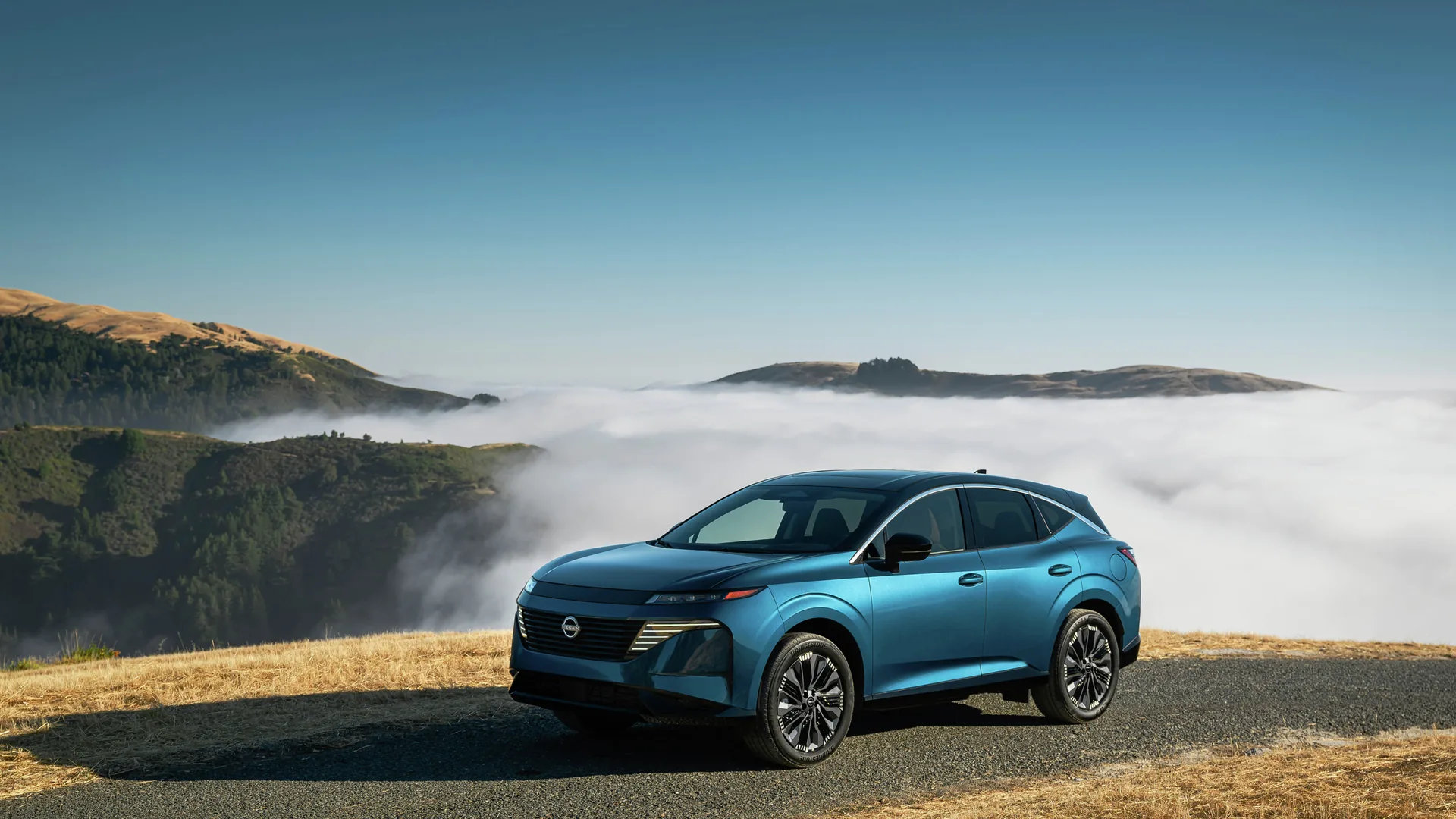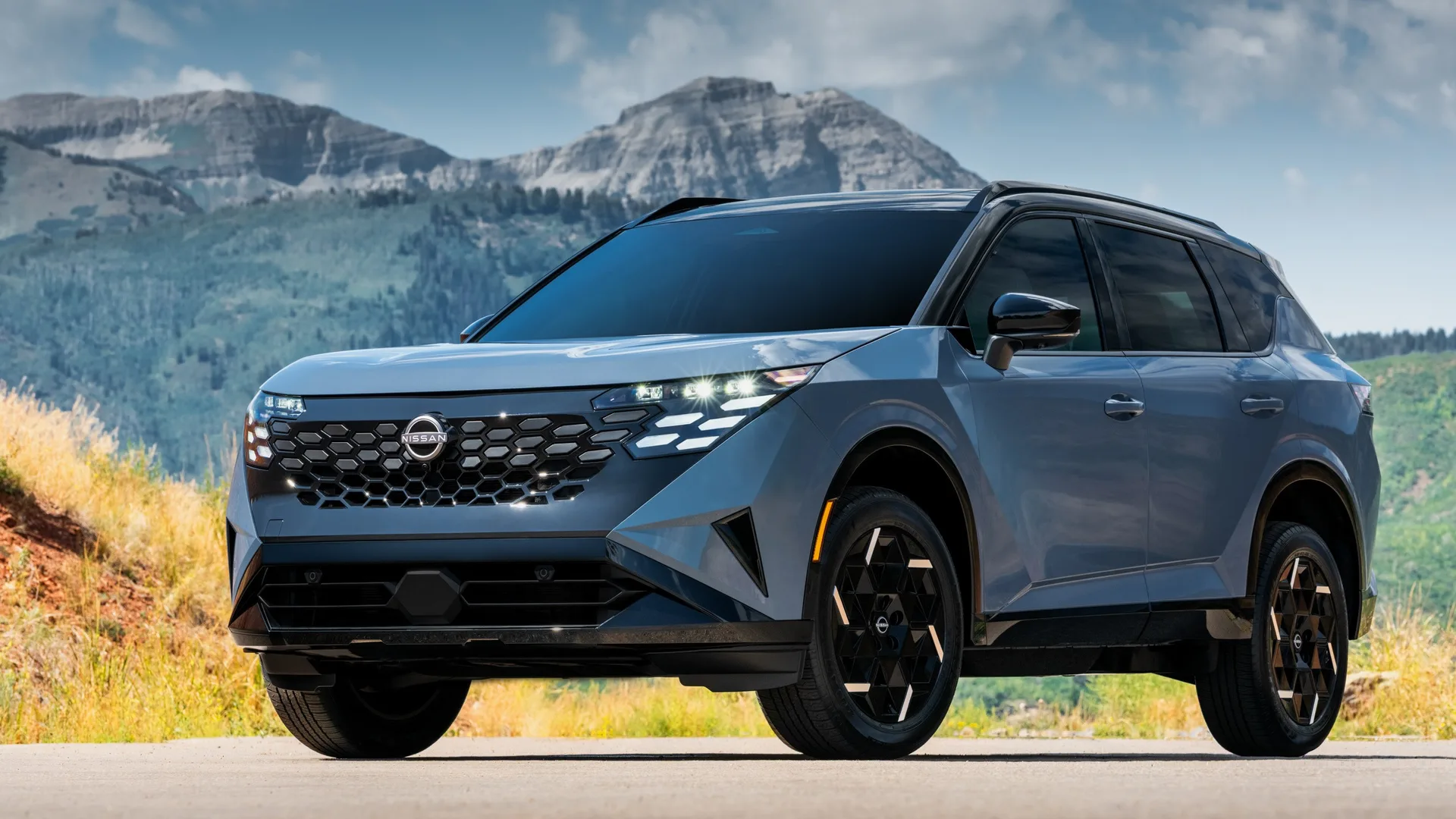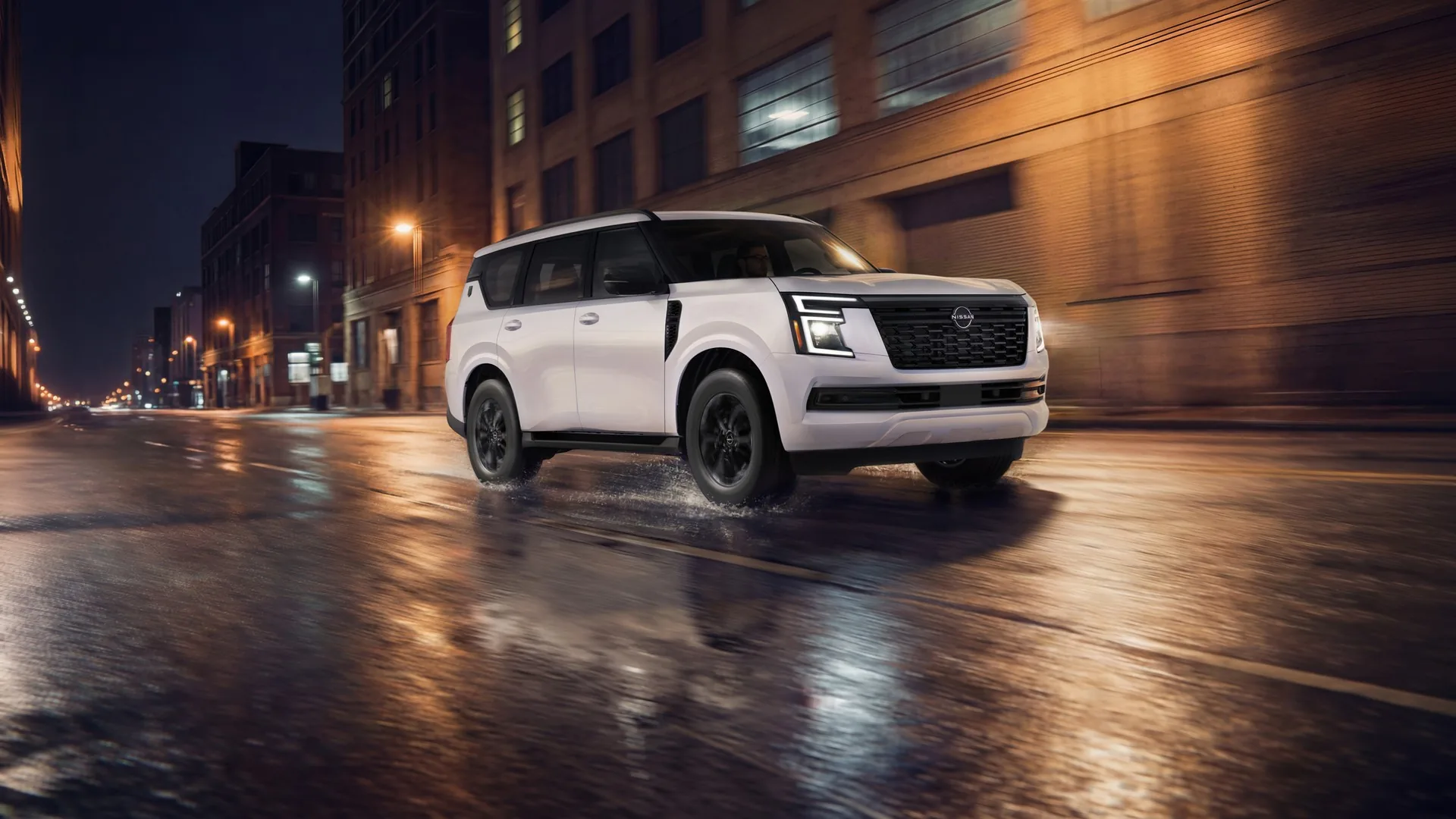
In brief: the five sizes
| Model | Seats | Cargo space, all seats occupied | Combined fuel consumption | Electric range | Towing |
|---|---|---|---|---|---|
| Rogue | 5 | 895 L | 7.6 L/100 km | Does not plug in | 680 kg |
| Rogue plug-in hybrid | 7 | 362 L | 9.1 L/100 km | 61 km | 680 kg |
| Murano | 5 | 932 L | 9.7 L/100 km | Does not plug in | 680 kg |
| Pathfinder | 8 (7 optional) | 470 L | 10.8 L/100 km | Does not plug in | 2,722 kg |
| Armada | 8 (7 on the NISMO) | 578 L | 13.7 L/100 km | Does not plug in | 3,856 kg |
See the full new Nissan lineup in the network
Rogue: the compact with standard all-wheel drive
The 2026 Rogue is a five-seat compact SUV, and it is the most fuel-efficient of the group: 8.3 L/100 km in the city, 6.8 on the highway, 7.6 combined according to Natural Resources Canada. It has a turbocharged 1.5-litre three-cylinder producing 201 horsepower, with a continuously variable transmission.
The surprising part: Nissan Canada lists the 2026 Rogue with all-wheel drive on every trim: S, SV, Dark Armor, Rock Creek and Platinum. There is no front-wheel-drive trim to avoid by accident. The Rock Creek trim, new this year, adds all-terrain tires, hill-descent control and a tubular roof rack; it uses a little more, at 8.0 L/100 km combined.
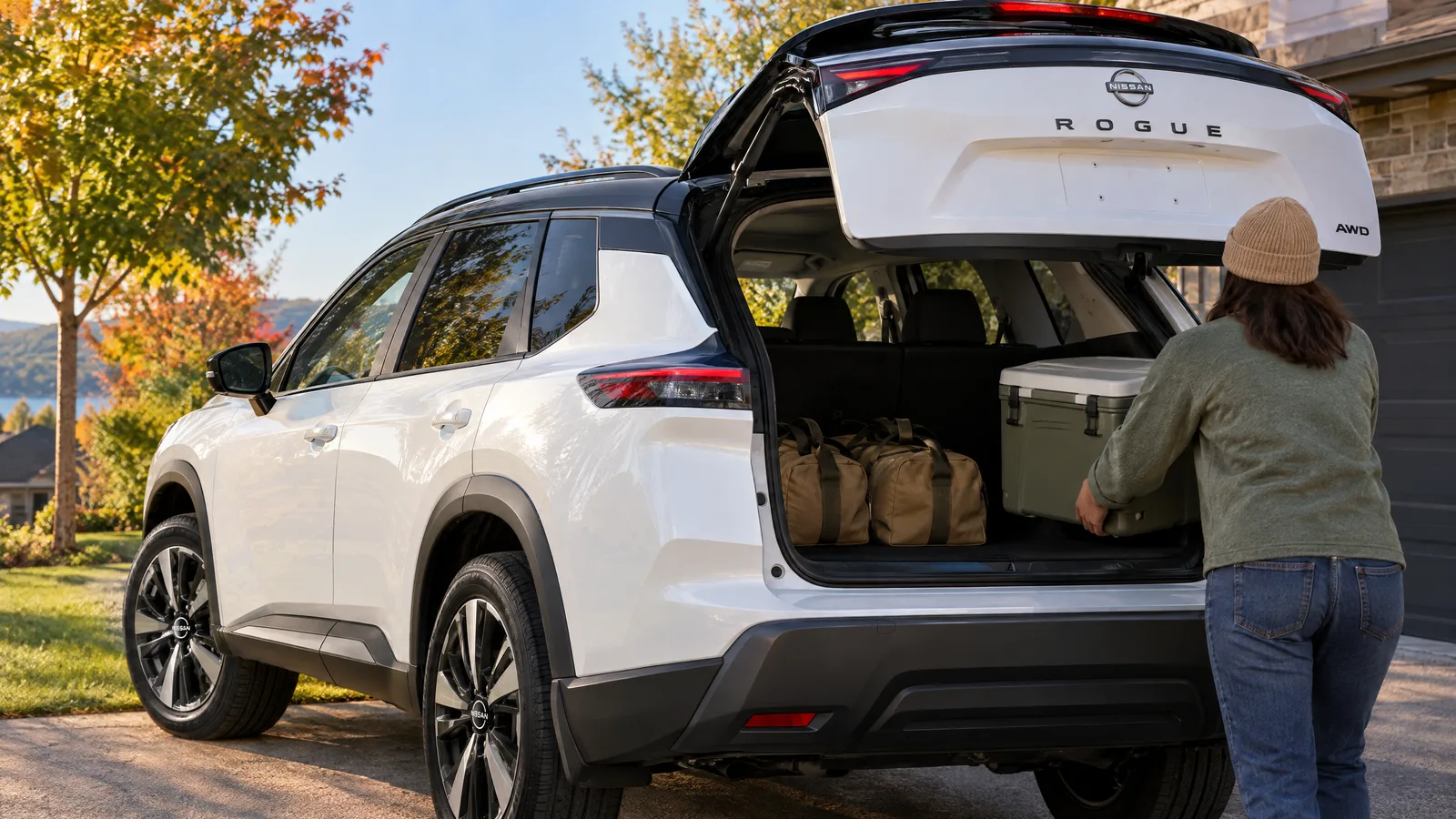
The cargo area gives 895 litres behind the rear seat on the S, SV and Dark Armor trims, and 1,033 litres on the Rock Creek and Platinum when the Divide-N-Hide adjustable floor is in its low position. With the rear seat folded, it climbs to between 2,064 and 2,098 litres depending on the trim. Towing: 680 kg (1,500 lb).
See the 2026 Rogue page and current priceFR.
Plug-in Rogue: seven seats, and it plugs in
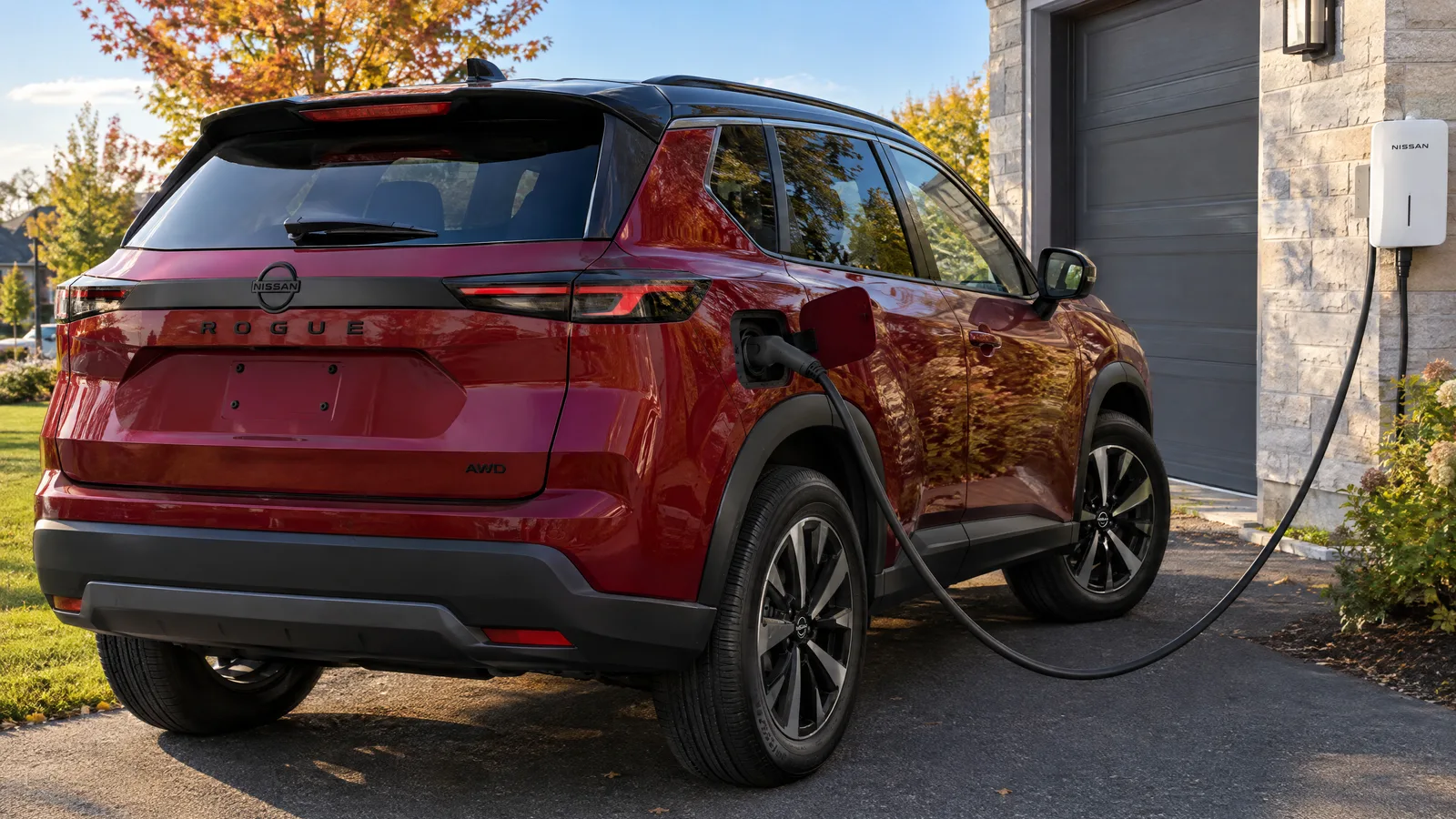
It is the most misunderstood model in the lineup, and the mistake is easy to make: people assume it is an ordinary Rogue with a plug. It is not. The 2026 Rogue Plug-in Hybrid is a different vehicle, with three rows and seven seats where the ordinary Rogue has five.
Under the hood, a 2.4-litre four-cylinder of 131 horsepower, two electric motors and a 20 kWh battery, for a combined output of 248 horsepower and 332 lb-ft. Natural Resources Canada rates it at 61 km of range on electricity alone and 3.7 Le/100 km combined on electricity and gas. Once the battery is empty, it uses 9.4 L/100 km in the city and 8.7 on the highway, on regular gas. Charging on a 240-volt station: about 7.5 hours.
The third row obviously changes the cargo space. Nissan Canada lists, on the Platinum trim with the sunroof, 362 litres behind the third row, 872 litres with the third row folded and 1,832 litres with the second row folded too. All-wheel drive is standard, with seven drive modes including Snow, Gravel and Mud. Towing: 680 kg (1,500 lb).
Who it is for: a family of six or seven that makes a daily round trip under 60 kilometres and can plug in at home. Without a charger, the 20 kWh battery becomes dead weight and the advantage disappears.
See the plug-in Rogue page and current priceFR.
Murano: five seats, two rows, upscale finish
The 2026 Murano plays a precise role: the size of a mid-size SUV, but only five seats and a generous cargo area rather than a third row. It is the same reasoning as the CX-70 at Mazda: the space that would have gone to rear passengers becomes cargo.
Behind the 60/40 rear seat that folds flat, Nissan Canada lists 931.6 litres, and 1,798 litres once the seatbacks are down. Engine: a 2.0-litre turbocharged four-cylinder with variable compression ratio, 241 horsepower and 260 lb-ft, nine-speed automatic transmission, regular gas. Official consumption: 10.6 L/100 km in the city, 8.6 on the highway, 9.7 combined, with Intelligent all-wheel drive.
It tows 680 kg (1,500 lb), like the Rogue. If the trailer matters, the Pathfinder is the one to look at.
See the 2026 Murano page and current priceFR.
Pathfinder: eight seats and 6,000 lb
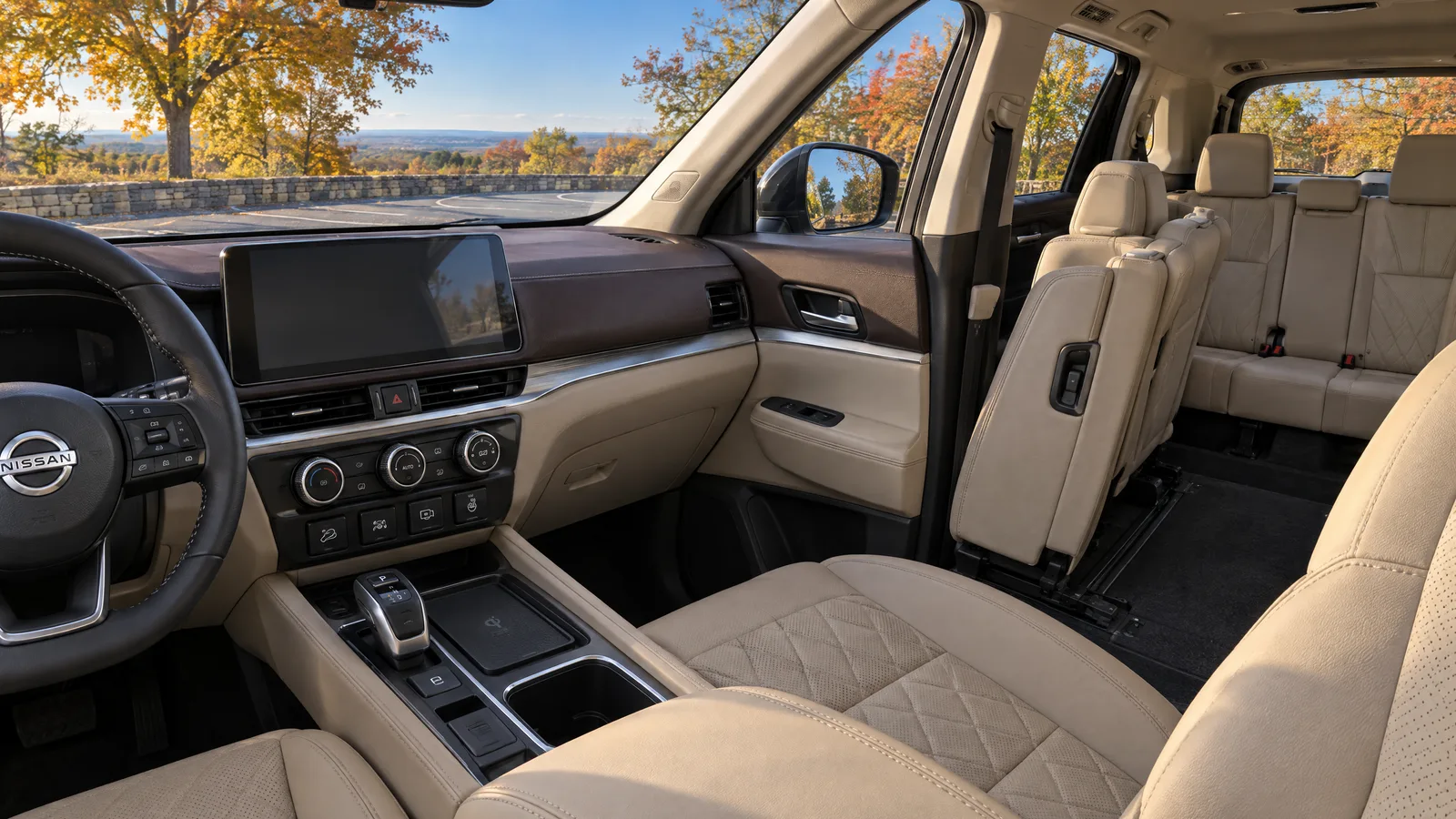
The 2026 Pathfinder is the lineup’s classic family SUV: three rows, eight seats as standard, or seven with the captain’s chairs offered on the Platinum trim. The second row tips forward to clear access to the third.
The cargo area gives 470 litres behind the third row and climbs to 2,279.5 litres with the second and third rows folded. A 3.5-litre V6 of 284 horsepower (295 on the Rock Creek trim), nine-speed automatic transmission, Intelligent 4x4 system. Consumption: 11.8 L/100 km in the city and 9.6 on the highway; the Rock Creek rises to 12.0 and 10.2, and it is the only Pathfinder trim whose recommended fuel is premium gas.
The standard towing capacity is 2,722 kg (6,000 lb), four times that of the Rogue or the Murano. It is the first model in the lineup that can pull a mid-size travel trailer.
See the 2026 Pathfinder page and current priceFR.
Armada: the big one
The 2026 Armada is in a different category. Truck frame, 3.5-litre twin-turbo V6 of 425 horsepower and 516 lb-ft (460 horsepower on the NISMO trim), nine-speed transmission, four-wheel drive, premium gas recommended.
What you come for: a towing capacity of up to 3,856 kg (8,500 lb), eight seats on the SL and PRO-4X trims (seven on the NISMO and on the trims with captain’s chairs), and a cargo volume of 20.4 cubic feet behind the third row, about 578 litres. With the third row folded, it goes to 56.3 cubic feet (about 1,594 litres); with the second folded too, 97.1 cubic feet, or about 2,750 litres.
The fuel bill follows the size: 14.7 L/100 km in the city and 12.4 on the highway, and 15.7 and 12.9 for the PRO-4X, nearly double the Rogue. The Armada is justified by the trailer and by eight seats on a long trip, not by everyday versatility.
See the 2026 Armada page and current priceFR.
How to decide with three questions
1. How many people, really? If it is five and stays five, the Rogue or the Murano give the best everyday cargo space: 895 and 932 litres, against 470 for the Pathfinder and 362 for the plug-in Rogue when every seat is in use. A third row that gets used three times a year costs you cargo space the other 362 days.
2. What do you tow? Under 680 kg, everyone qualifies. Beyond that, the lineup splits in two: Pathfinder at 2,722 kg, Armada at 3,856 kg, and nothing in between.
3. Do you have a charger? It is the only question that decides the plug-in Rogue. With a charger and a short daily commute, its 61 electric kilometres cover the whole week. Without a charger, it goes back to being a gas SUV that uses 9.1 L/100 km combined, more than an ordinary Rogue at 7.6.
Where to see the current price
New-vehicle prices change from one model year to the next, and sometimes during the year. Rather than an amount that would go out of date, each model above carries a link to its page on the dealership’s website, where the displayed price is the day’s price, trim by trim.
Three useful pages for what comes next: the network’s offers page for the rebates in effect, your trade-in appraisal, and the list of new plug-in hybrids in the network if the plug-in Rogue interests you.
Compare the new Nissans in the network Appraise my current vehicle Find my Nissan dealership
 Watch the video on YouTube
Frequently asked questions
Does the plug-in hybrid Rogue have seven seats?
Yes. Nissan Canada presents it with three rows and seven seats, whereas the ordinary Rogue has five. It is the difference most often missed between the two vehicles.
Is there a Rogue hybrid that doesn’t plug in?
Not in the catalogue of the Groupe Beaucage Nissan dealerships. The network offers the gas Rogue and the plug-in hybrid Rogue, which plugs in. There is no plain hybrid version in between.
Which Nissan SUV has the biggest cargo area when every seat is occupied?
The Murano, with 931.6 litres behind its rear seat. The Rogue follows closely with 895 litres, or 1,033 litres on the Rock Creek and Platinum trims when the adjustable floor is in its low position. The three-row models fall much lower: 578 litres for the Armada, 470 for the Pathfinder, 362 for the plug-in Rogue.
Is all-wheel drive standard on the Rogue?
Nissan Canada lists the 2026 Rogue trims (S, SV, Dark Armor, Rock Creek and Platinum) with all-wheel drive. Confirm the exact trim on the model page before ordering, since the offer can change during the year.
Are these fuel consumption figures still current?
They come from Natural Resources Canada’s official ratings for the 2026 model year, gathered on . These ratings are revised with each model year: if you are reading this later, check the model page, which carries the current information.
Where can I see the price of a specific trim?
On the model page, in the configuration section: each trim carries its current price there. The links in this article lead straight to those pages.