At a glance
Rules verified on .
| Mandatory period | December 1 to March 15, inclusive; this winter, December 1, 2026 to March 15, 2027 |
|---|---|
| Compliant tires | They bear the mountain and snowflake symbol, or are fitted with studs |
| Vehicles covered | All motorized road vehicles registered in Quebec, including rental vehicles |
| Fine | $200 to $300 |
| Studs permitted | October 15 to May 1 |
| Tread wear | Legal minimum: 1.6 mm; recommended for winter: at least 4.8 mm |

The dates: December 1 to March 15
The requirement is set out in the Highway Safety Code and the Regulation respecting the use of tires specifically designed for winter driving. The Government of QuebecFR is clear: winter tires are mandatory from December 1 through March 15, and the SAAQFR specifies “inclusive.” The rule is the same each year: for winter 2026–2027, the period therefore runs from December 1, 2026 to March 15, 2027.
These were not always the dates: following a legislative amendment adopted in 2018, the requirement now starts earlier, on December 1. No further change has been announced since: the official November 2025 reminder and the government page updated in July 2026 repeat the same dates and fine.
When to actually install them
December 1 is the deadline, rather than the ideal date. Two reasons to book earlier:
- Cold weather, rather than snow. Transport CanadaFR explains that below 7 °C, all-season and summer tires begin to lose their elasticity, and therefore their grip. In Quebec, morning temperatures often cross that threshold by late October or early November, well before December 1.
- The first snowfall sends everyone rushing. Every fall, the first snowfall fills installation schedules within days. Those who booked in October can drive with peace of mind; everyone else waits.
In practice, book in October for installation in late October or early November, depending on your region and driving. If you often leave early in the morning or drive in a colder region, do not wait.

Which tires comply: the symbol
According to the Government of Quebec, tires designed for winter driving must bear the official symbol or be fitted with studs. This symbol, described by Transport Canada as a mountain peak and snowflake, is moulded into the tire's sidewall. It indicates that the tire has passed a snow performance test.
What to keep in mind:
- a tire marked only M+S (mud and snow), like many all-season tires, does not bear this symbol: without it or studs, the tire does not meet the requirement;
- some tires sold as “all-season” bear the symbol: what matters is the symbol on the sidewall, rather than the tire's marketing name;
- the SAAQ recommends fitting the vehicle with four winter tires that comply and are in good condition. Transport Canada gives the same advice: a set of four, never just two.
Who is covered, and the exceptions
The requirement applies to all motorized road vehicles registered in Quebec, including vehicles offered for rental. The Government of Quebec does, however, provide exceptions, including:
- the 7 days following the purchase of a vehicle from a dealership;
- the 7 days before the end of a lease lasting one year or more;
- vehicles registered outside Quebec, trailers, heavy vehicles, equipment vehicles, farm machinery and motor homes;
- the spare tire, and a few special cases, such as vehicles with an X licence plate or a temporary registration certificate.
Buying a new vehicle in November? The 7-day period follows delivery: the easiest approach is to arrange for winter tires at the dealership when you take delivery.
Will your tires last another winter?
A worn winter tire loses exactly what makes it useful: deep grooves that bite into snow and channel slush away. The official guidelines:
- tread depth must never be less than 1.6 mm, the legal minimum;
- for winter, the Government of Quebec recommends at least 4.8 mm;
- the quarter test: insert a 25-cent coin into a groove with the caribou's nose pointing down. If you can see the entire nose, the tread is too shallow for winter.
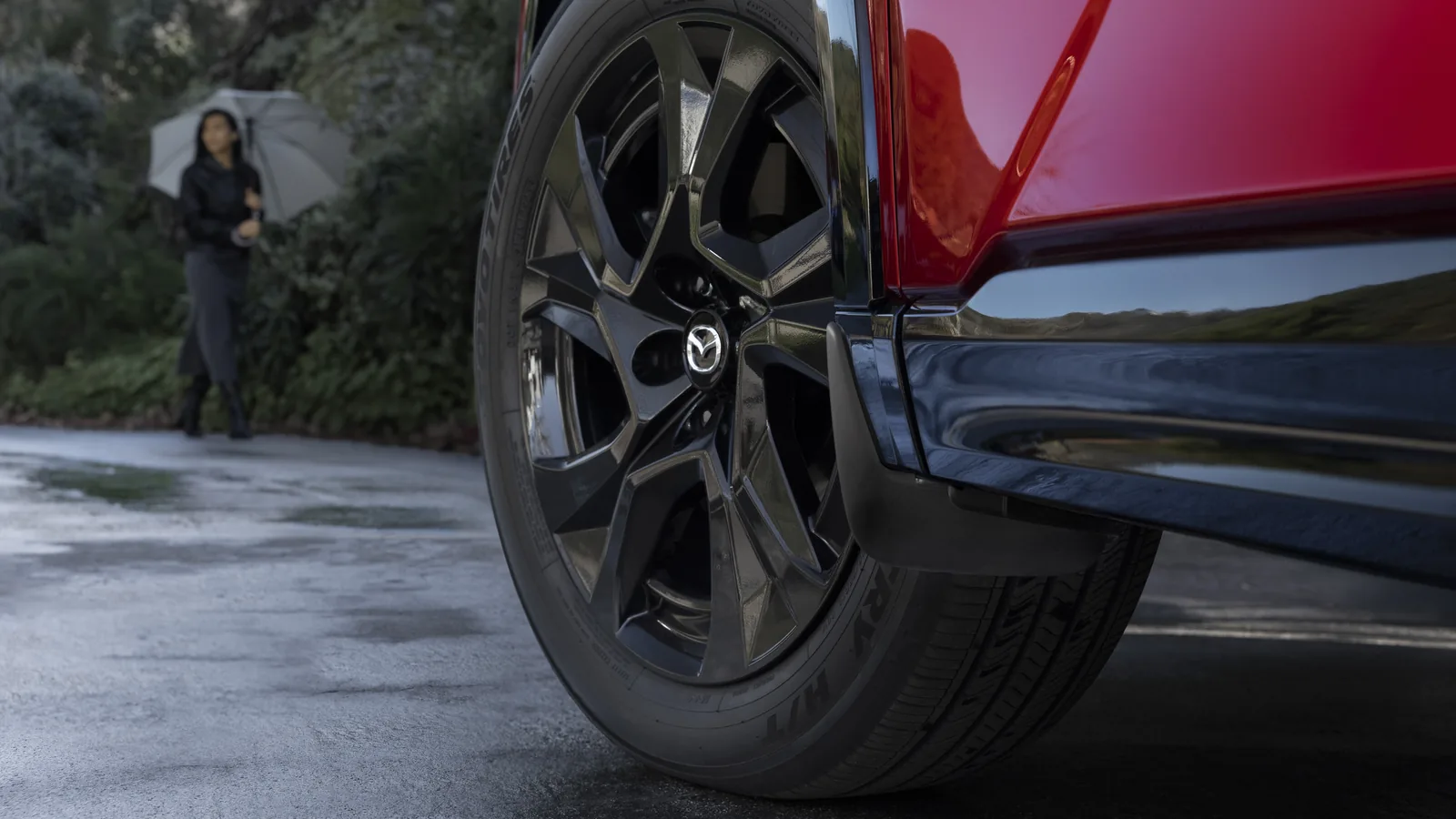
Also check the tire's age, cracks in the sidewall and uneven wear, which often points to an alignment problem. An advisor can check these in a few minutes during installation.
Studded tires: October 15 to May 1
Studded tires are permitted in Quebec from October 15 to May 1 on passenger vehicles, taxis and commercial vehicles weighing less than 3,000 kg, according to the Government of Quebec. Outside that period, they are prohibited. They improve grip on ice, at the cost of a noisier ride on dry pavement.
Book an appointment in our network
All Groupe Beaucage dealerships install and balance tires, ideally during your regular maintenance, with the team that knows your vehicle. The right tire depends on your vehicle, mileage and roads: describe them in a few questions, and the dealership will suggest suitable tires, with a price and an installation appointment. Seasonal offers on tires from the network's brands, when available, appear in our offers.
Drive an EV? Cold weather also affects range: our article on winter range explains how much, and how to keep as much of it as possible.
Get my winter tiresFind my dealership
Frequently asked questions
When do winter tires become mandatory in 2026?
From December 1, 2026 through March 15, 2027, inclusive. The rule is the same every year: December 1 to March 15.
What is the fine if I do not have winter tires?
$200 to $300, according to the Government of Quebec.
Are my all-season tires accepted?
Only if they bear the mountain and snowflake symbol. The M+S marking alone is not enough.
When can I remove my winter tires?
The requirement runs through March 15, inclusive. After that, removing them is permitted, but frost and storms are common in March and April: many people wait until mid-April. Studded tires, however, must be removed by May 1 at the latest.
I just bought a vehicle in December. Do I have a grace period?
Yes: 7 days after buying from a dealership, according to the Government of Quebec. The easiest approach is to have winter tires installed before driving away with the vehicle.
Do I need four winter tires, or are two enough?
Four. The SAAQ and Transport Canada both recommend a set of four winter tires: using only two creates a grip imbalance between the front and rear.